INTEGRATING PSYCHOSYNTHESIS IN TAROT READING
What is Psychosynthesis?
Psychosynthesis is a spiritual and holistic approach to psychology that views human growth as a journey of integrating the personality with the spiritual or higher self.
Founded in 1910 by Italian psychiatrist Roberto Assagioli—a contemporary of Sigmund Freud and Carl Jung—psychosynthesis goes beyond traditional psychology. While traditional psychoanalysis focuses on fixing what is "broken" or digging into past trauma, psychosynthesis focuses on who you can become.
It asks: What is trying to be born in your life right now?
Here is a breakdown of the framework:
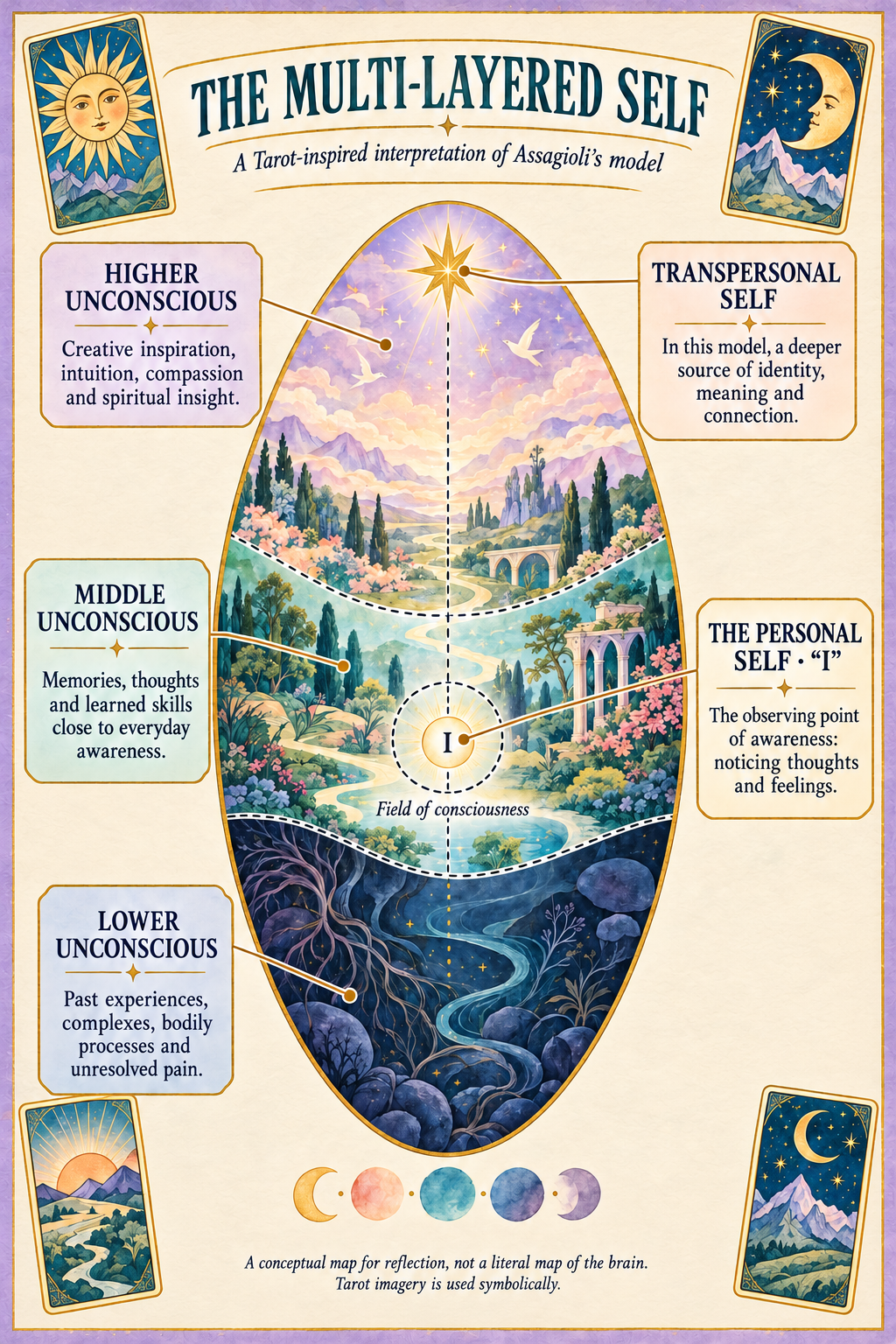
Assagioli mapped human consciousness using a famous oval diagram, dividing our psychology into distinct zones:
The Lower Unconscious: The home of our past experiences, psychological complexes, basic bodily functions, and old traumas.
The Middle Unconscious: The place where our immediate memories, thoughts, and skills live. It is easily accessible to our everyday awareness.
The Higher Unconscious (Superconscious): The source of our highest intuition, artistic inspiration, humanitarian impulses, and spiritual insights.
The "I" (Personal Self): The center of your everyday awareness. It is the observer—the quiet point of consciousness that witnesses your thoughts and feelings without getting swept away by them.
The Higher (Transpersonal) Self: Your ultimate, unchanging essence. It exists above the everyday ego and represents your true life calling or purpose.
The Multi-Layered Self (The "Egg Diagram")
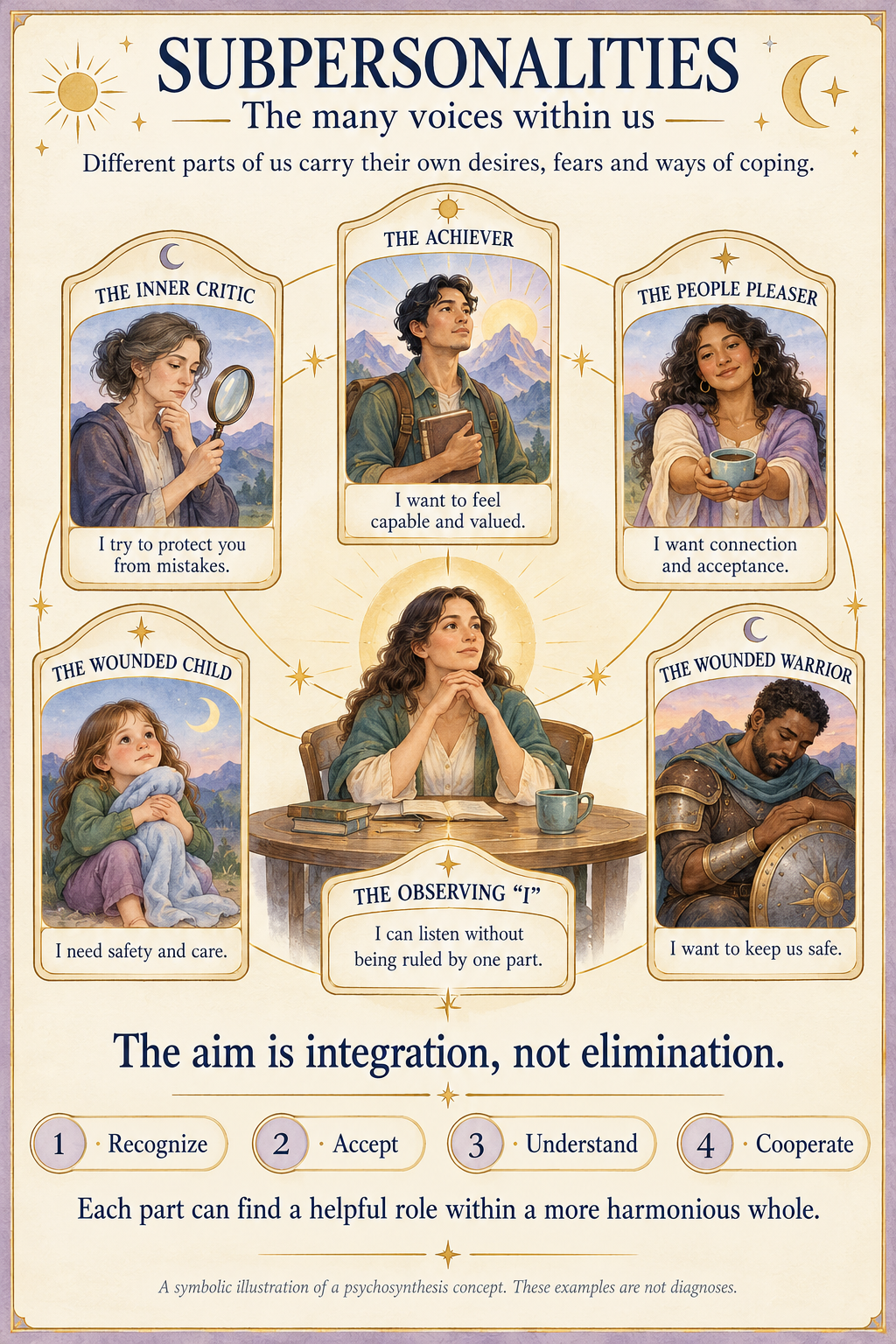
Psychosynthesis recognizes that we are not just one single, uniform personality. Instead, we are made up of many different subpersonalities—inner characters that have their own desires, fears, and voices.
Examples: The Inner Critic, the Wounded Child, the Achiever, the People Pleaser, or the Wounded Warrior.
The Goal: Psychosynthesis does not try to kill off these subpersonalities. Instead, it helps you recognize them, accept them, and integrate them so they work together as a harmonious team rather than fighting for control.
2. SUBPERSONATLITIES
This is the primary tool used in psychosynthesis. We often suffer because we completely identify with our temporary states (e.g., saying "I am angry" or "I am a failure").
Through disidentification, you learn to shift your language and mindset to: "I am experiencing anger, but I am the observer who is aware of this anger."
By stepping back into the role of the observer (the "I"), you regain your personal power.
3. DISIDENTIFICATION
4. Mapping Assagioli's "Egg Diagram" to the Deck
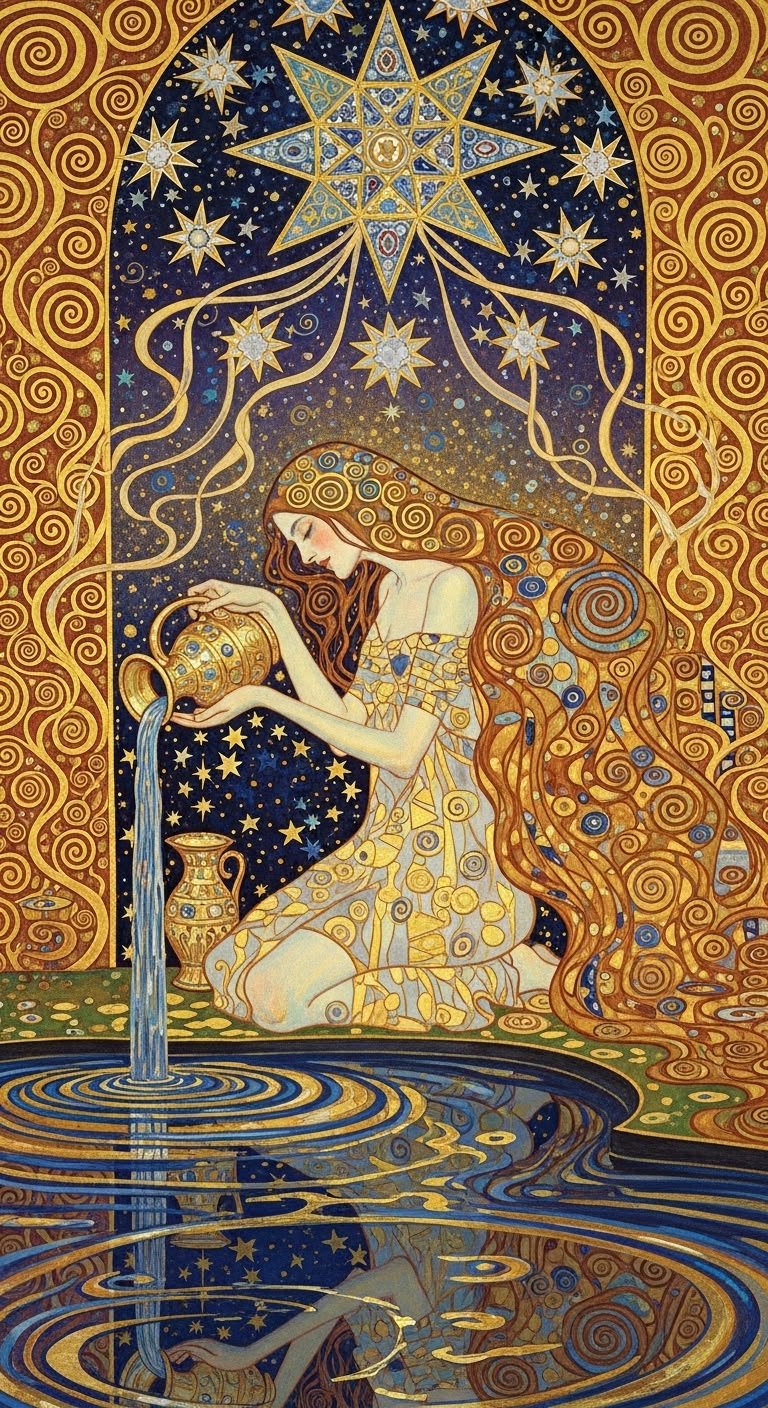
The structure of a standard Tarot deck perfectly mirrors the different layers of consciousness outlined in psychosynthesis:
The Minor Arcana (The Middle Unconscious): The daily grind, immediate thoughts, emotional reactions, and everyday conflicts (e.g., the Five of Wands clashing staves).
The Court Cards (The Lower Unconscious / Subpersonalities): Our deep-seated coping mechanisms, shadow sides, and conditioned emotional responses.
The Major Arcana (The Higher Unconscious & Transpersonal Self): The evolutionary journey of the soul. Cards like The Star, The Hermit, or The Fool represent transpersonal energies, spiritual awakenings, and the direct pull of your life's higher calling.
5. Activating the transpersonal will
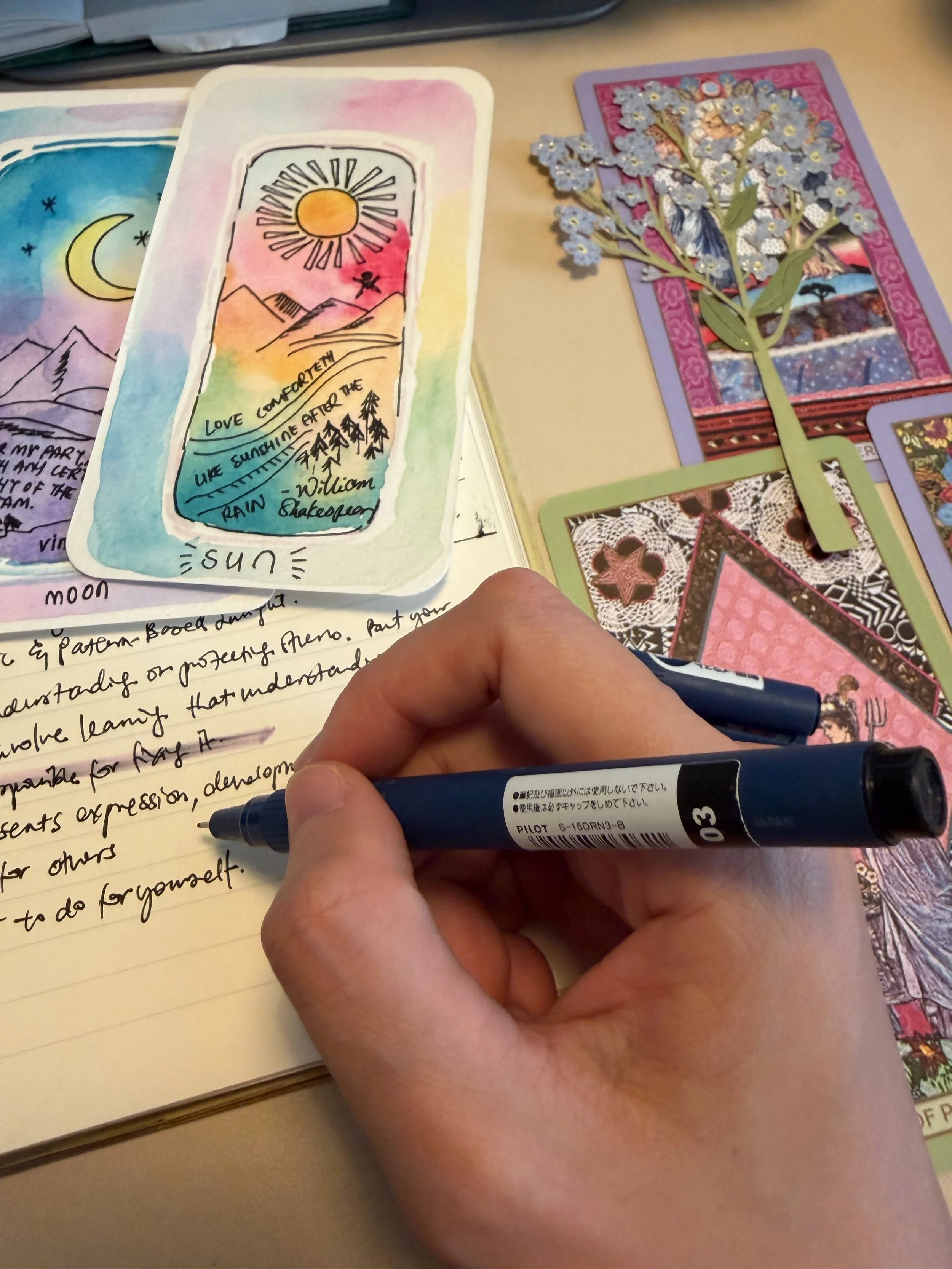
Psychosynthesis emphasizes using the "Will" to make conscious choices aligned with your Higher Self, rather than reacting blindly out of old trauma.
The Approach: A psychosynthesis-informed Tarot reading never leaves you passive. It doesn't say, "This is what will happen to you." Instead, it asks: "Given that these cards represent your current inner landscape, how can your central 'I' use its Will to harmonize these energies?" It transforms Tarot from a tool of divination into a tool of conscious choice.