UNDERSTANDIng trAUMA
"Trauma is not what happens to you. Trauma is what happens inside you as a result of what happens to you." — Dr. Gabor Maté
WHAT HAPPEN TO US WHEN WE LIVE WITH UNRESOLVED TRAUMA
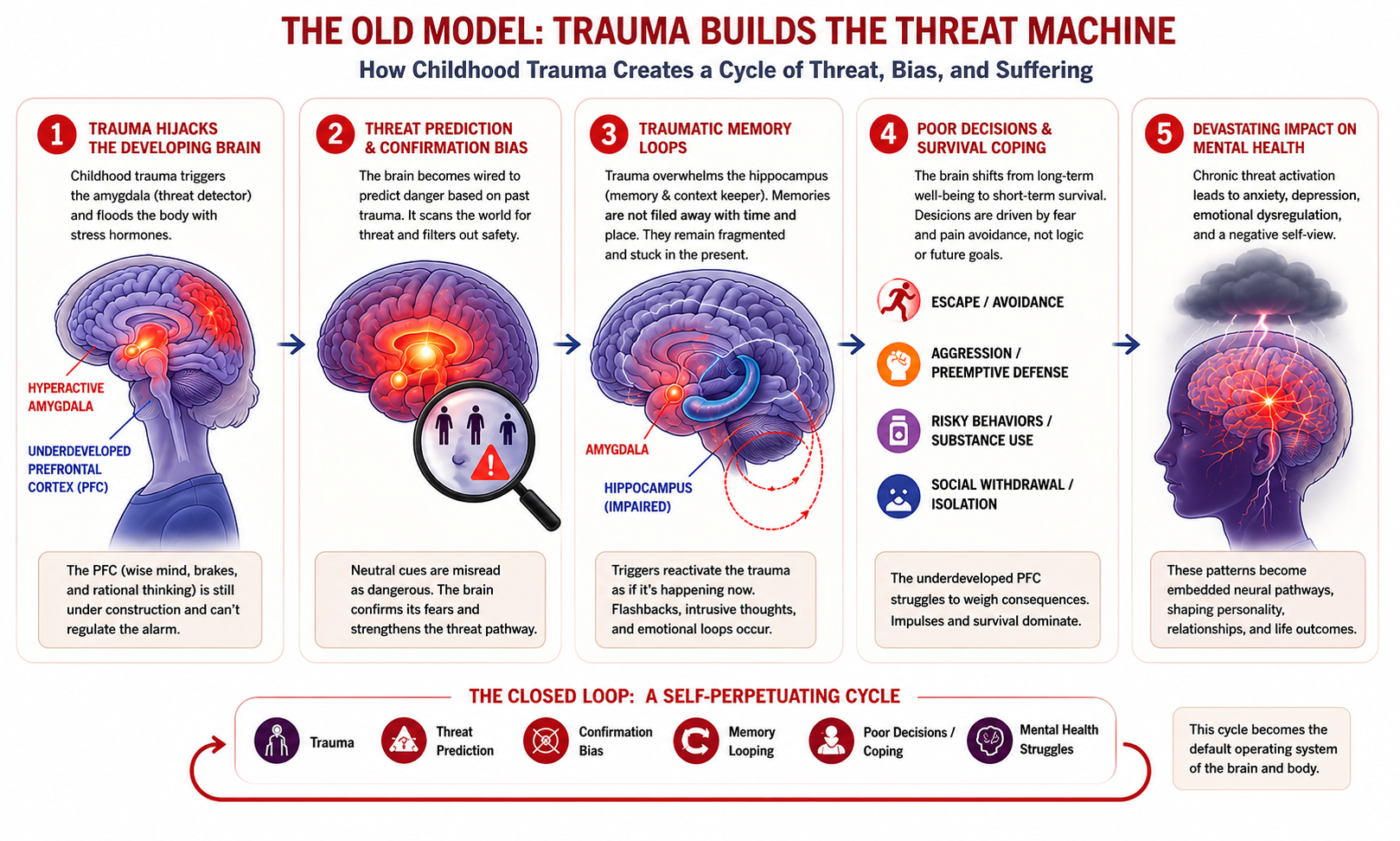
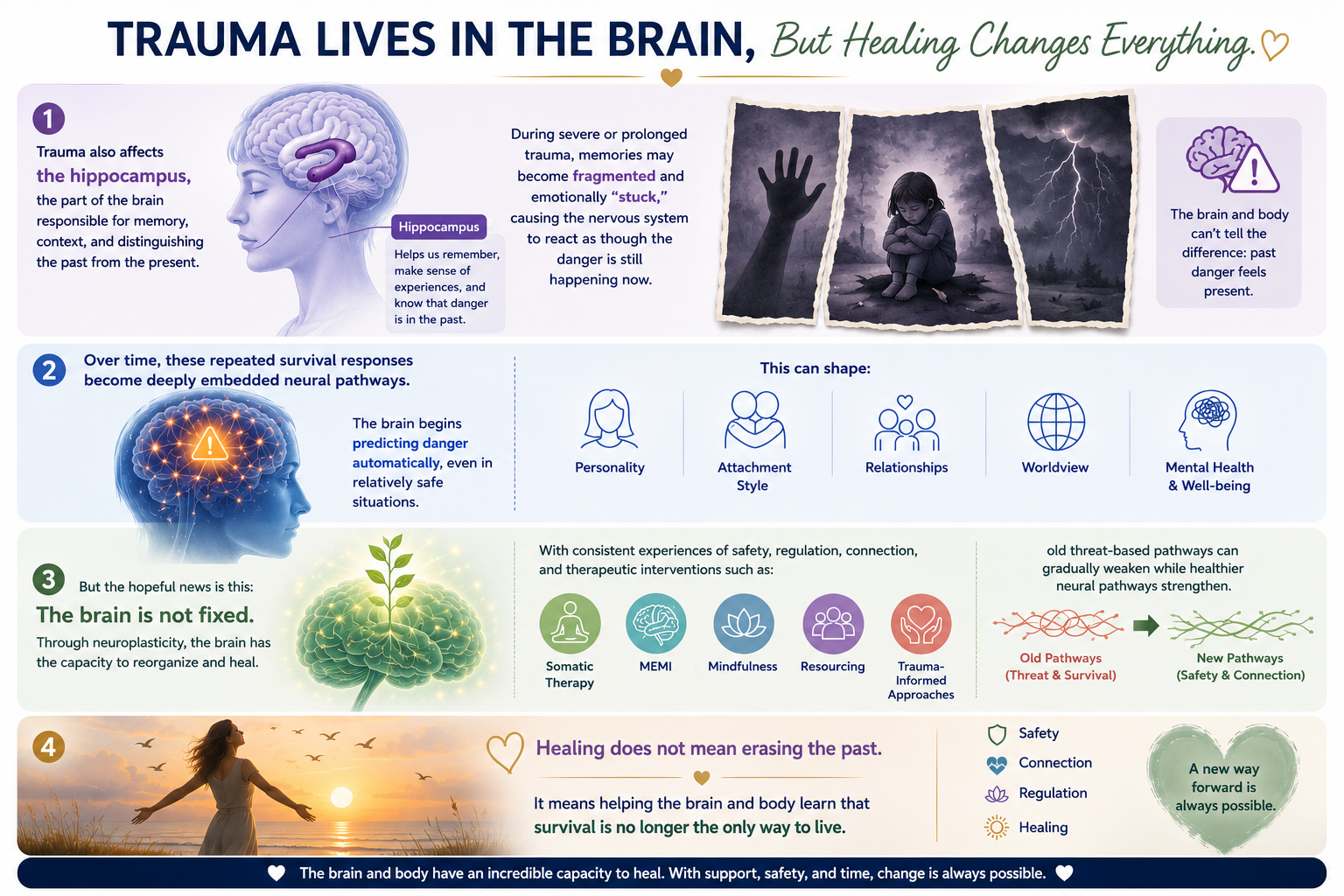
Trauma does not only affect our emotions — it affects the brain, nervous system, body, relationships, and the way we perceive the world.
When a person experiences overwhelming fear, abuse, neglect, or chronic stress, the brain shifts into survival mode. The amygdala, often referred to as the brain’s “alarm system,” becomes highly activated and begins scanning constantly for danger. At the same time, the prefrontal cortex (PFC) — responsible for reasoning, emotional regulation, impulse control, and decision-making — becomes less effective, especially during chronic stress or childhood trauma.
This means the brain prioritizes survival over reflection.
As a result, many individuals living with unresolved trauma may experience:
Chronic anxiety or hypervigilance
Emotional dysregulation
Intrusive memories or traumatic memory loops
Negative self-beliefs and self-blame
Difficulty trusting others
Confirmation bias toward danger or rejection
Poor coping mechanisms or impulsive decision-making
Dissociation, numbness, or emotional shutdown