MEMI (Multichannel Eye Movement Integration) is a neuroscience-informed therapeutic approach designed to support the processing and reconsolidation of distressing or traumatic memories in a gentle, non-invasive way.
Unlike approaches that require individuals to repeatedly relive or verbally recount traumatic experiences, MEMI works by engaging multiple sensory channels together with guided eye movements to help the brain reorganize how traumatic memories are stored and processed.
ABOUT MEMI

MEMI aims to support memory reconsolidation — a neurobiological process where previously stored emotional memories become flexible enough to be updated with new information, safety, and regulation.
Through structured sensory engagement and guided eye movements, the brain is given an opportunity to interrupt old predictive survival patterns and create new neural associations rooted in safety and present-moment awareness.
Over time, this can support:
Reduced emotional intensity linked to traumatic memories
Nervous system regulation
Increased sense of safety and grounding
Improved emotional flexibility
Weakening of old threat-based neural pathways
Strengthening of healthier adaptive pathways

MEMI can also be integrated with other modalities such as somatic therapy, mindfulness, hypnosis, art therapy, Brain Switch, and Clinical & Transpersonal Regression Therapy to support stabilization, emotional integration, and long-term healing.
Importantly, clients are NOT required to disclose detailed traumatic content during the process, making MEMI especially supportive for individuals who may feel overwhelmed by traditional talk-based trauma processing approaches.
NEUROPLASTIC
SCHEMA
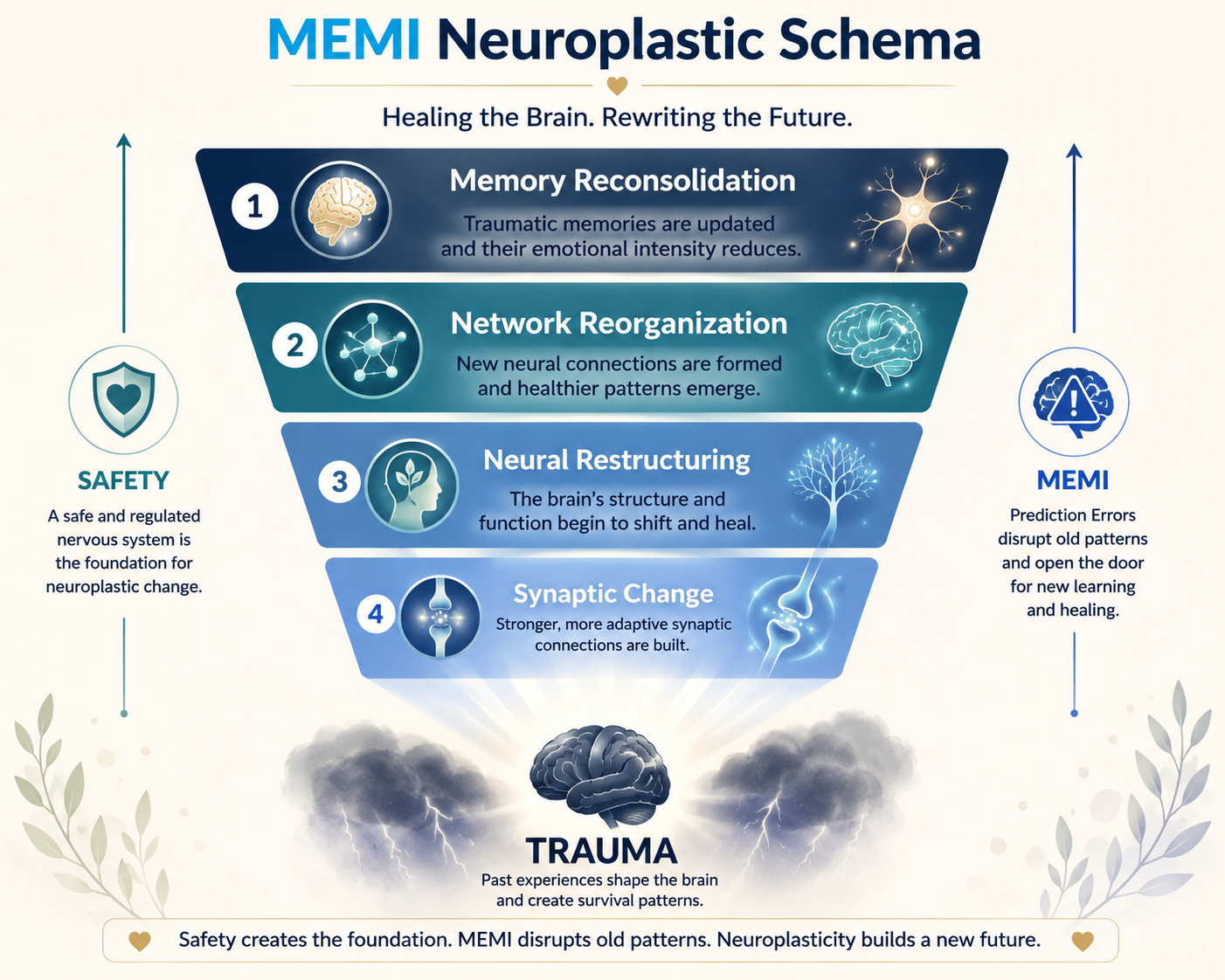
The neuroplastic schema explains how the brain can reorganize and heal after trauma through repeated experiences of safety, regulation, and new learning. Trauma creates deeply embedded survival-based neural pathways that keep the brain predicting danger even in safe situations.
Through processes such as memory reconsolidation, network reorganization, neural restructuring, and synaptic change, the brain gradually weakens old threat-based patterns while strengthening healthier pathways associated with safety, emotional regulation, connection, and adaptive beliefs. This demonstrates the brain’s natural capacity for neuroplasticity — the ability to change, adapt, and heal over time.